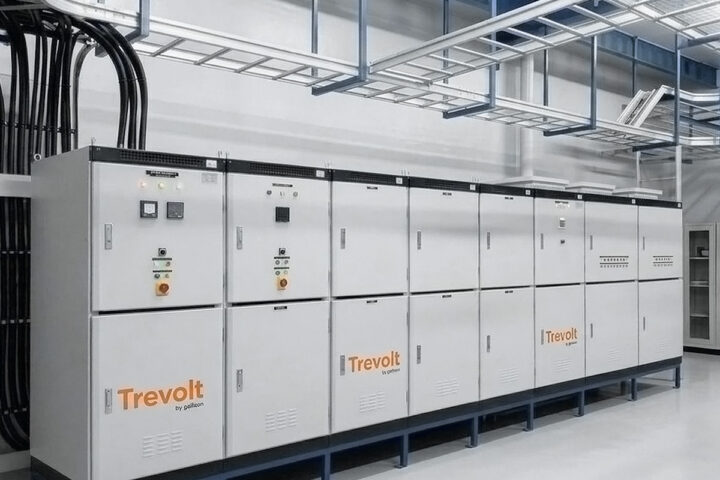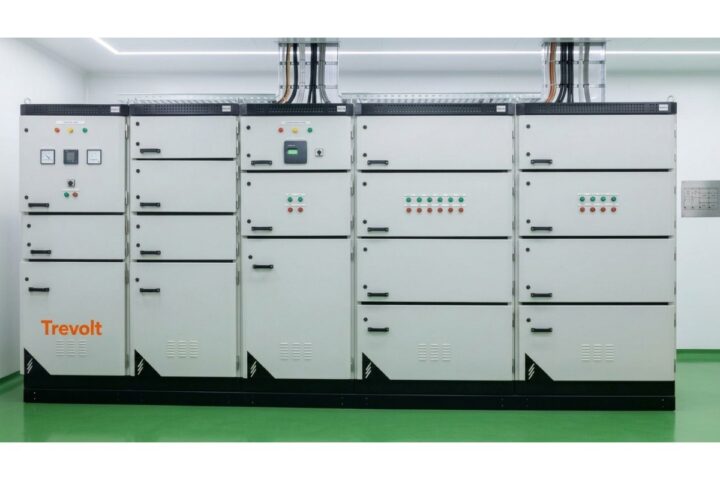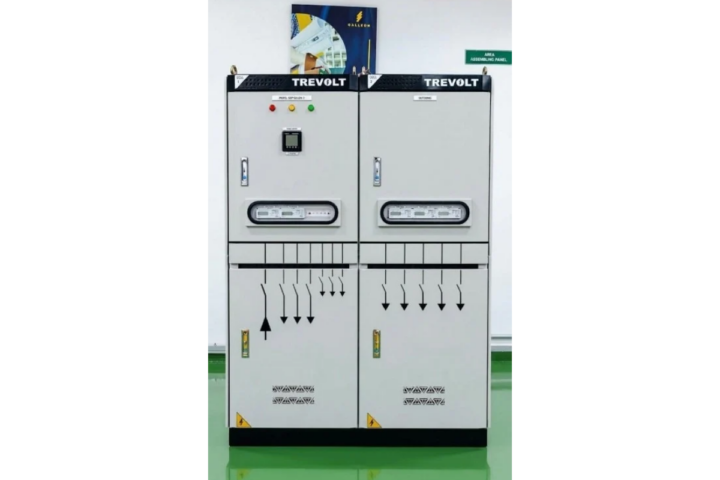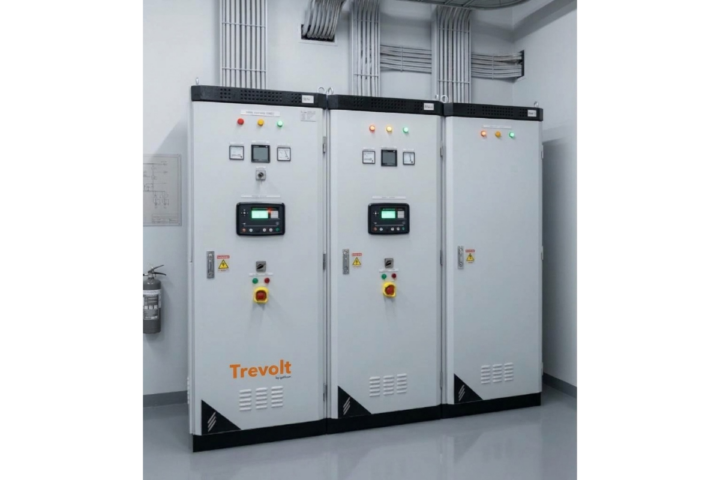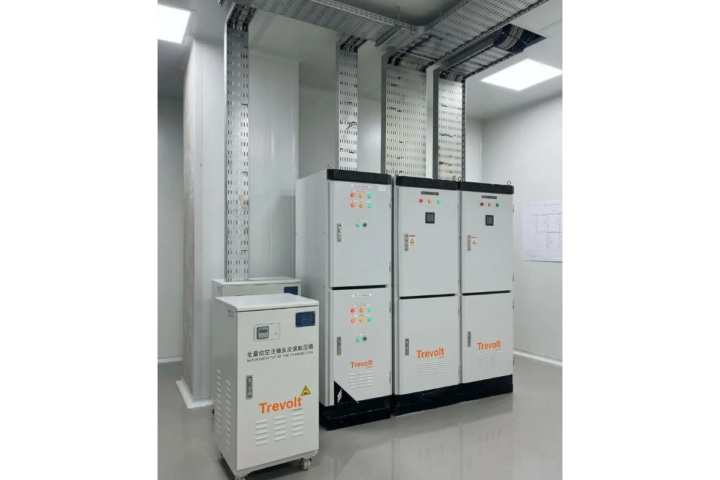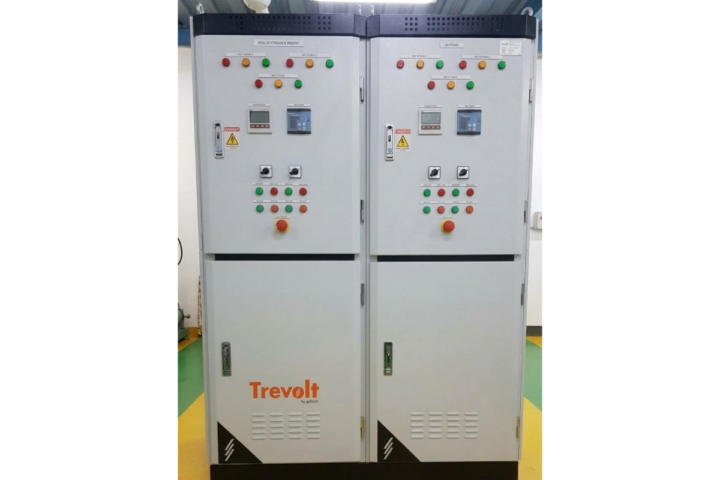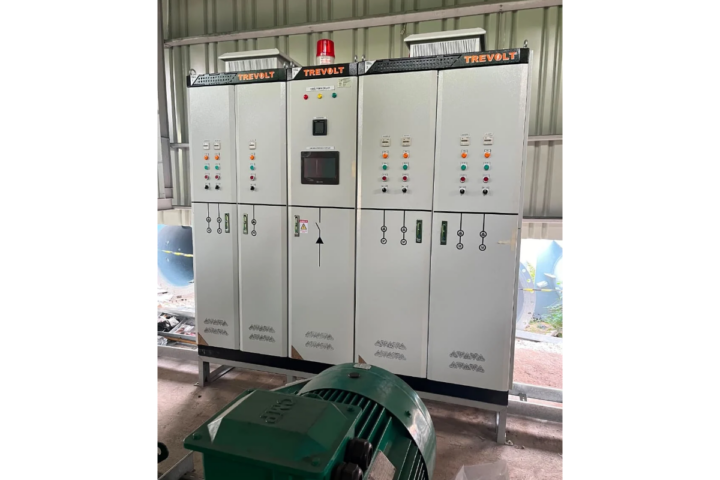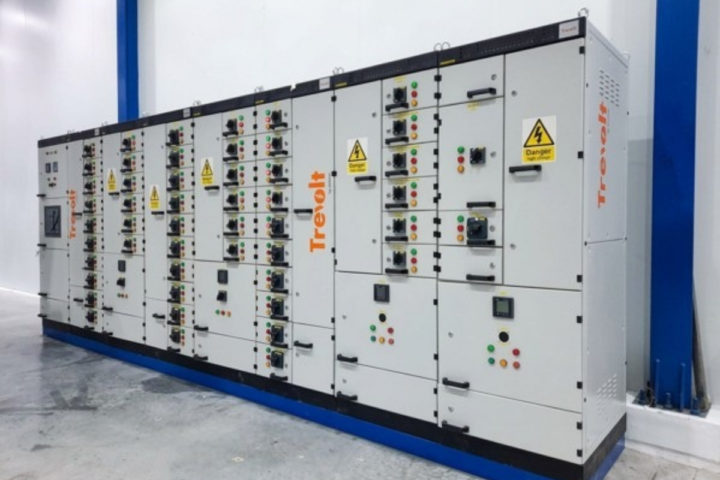


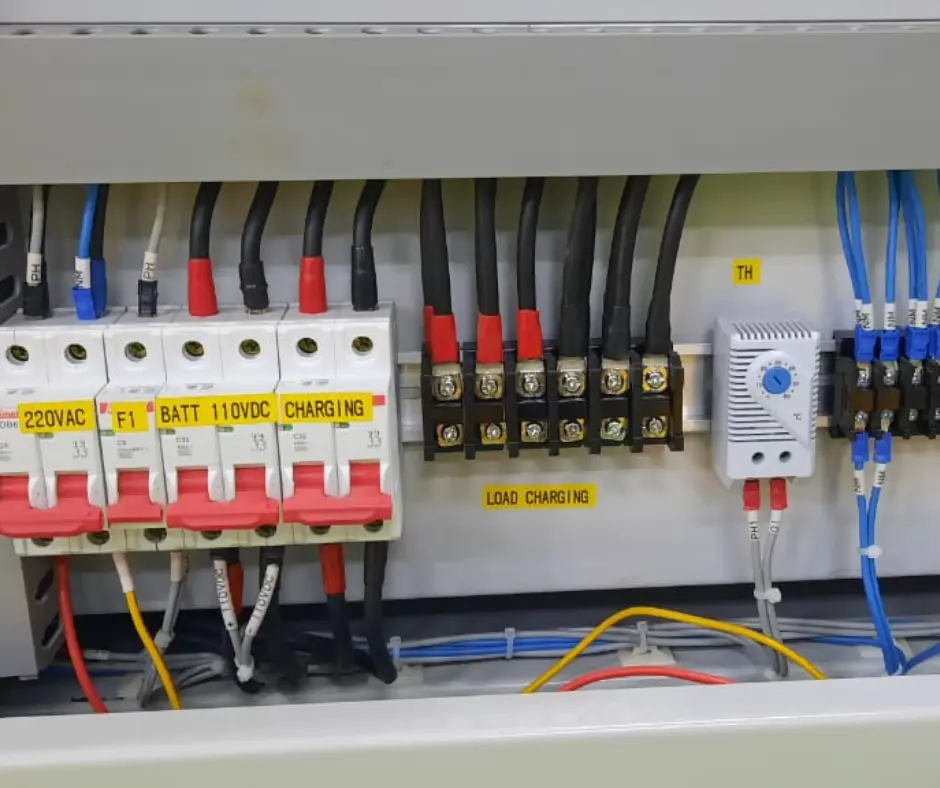
Low Voltage Panel (TREVOLT by Galleon)
Battery Charger Panel
Description
A battery rectifier charger panel is an electrical device that converts alternating current (AC) from the utility grid (PLN) or a generator into stable direct current (DC), while also charging and supplying power to backup batteries (such as VRLA, NiCd, or Lithium).
Main Functions
- Rectification: Converts AC voltage (typically 220V/380V) into DC voltage (for example, 24VDC, 48VDC, or 110VDC).
- Battery Charging: Keeps stationary batteries continuously fully charged (floating/constant voltage charging).
- Backup Power: Supplies DC power uninterruptibly to critical loads during a main power failure (blackout).
Main Components in the Panel
- Rectifier Module: The core unit that performs the AC-to-DC conversion.
- Controller / Digital Control Unit: Manages charging parameters, voltage, current, and battery condition monitoring.
- Stationary Batteries: The energy storage medium (for example, nine 12V VRLA batteries for a 110VDC system).
- Ammeter / Voltmeter / LCD Monitor: Measuring instruments for monitoring charging current and voltage.
- Protection (MCB / Fuse / SPD): Protects against overcurrent, short circuits, and lightning surges (Surge Protection Device).
Applications
- Substations & Power Plants: Supplies power for circuit breaker trip coils, relay protection systems, and control.
- Telecommunications: Powers transmitter equipment and 48VDC network systems.
- Manufacturing Industry & Refineries: Keeps emergency control systems and alarms running during a power outage.